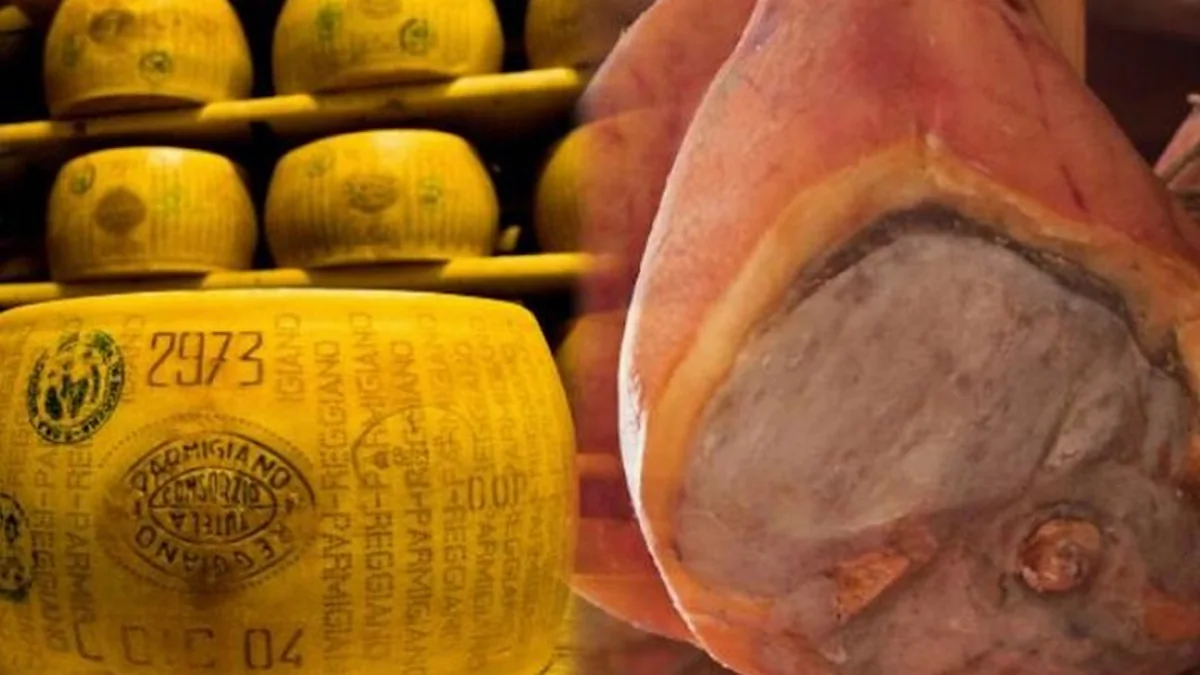
Booking choice: The Parma ham maker tour, from $99 per person. Check dates Compare the options below
Prosciutto di Parma is a whole pork leg on the bone, cured with sea salt and time in the hills south of Parma. The method is fixed by the rules of the Consorzio del Prosciutto di Parma, founded in 1963, and new rules approved in 2025 made it stricter.
Below: the ingredients, every step in order with its timing, salting, resting and drying, sugnatura, how long it ages, the needle test, the crown, and the numbers behind it.
The quick answer
Fresh legs are salted with sea salt, rest for 60 to 90 days in cold rooms, are washed, dried and pre-cured for about three months, then sealed with a paste of lard on the lean face and cured in cellars. After at least 14 months (12 before the 2025 rules), an inspector tests each ham with a horse-bone needle, and those that pass are fire-branded with the five-pointed ducal crown.
What is Prosciutto di Parma made of?
Pork legs and sea salt. No nitrites, nitrates or other preservatives are allowed.
The legs come from heavy pigs born and raised in northern and central Italy; the 2025 rules also call for heavier fresh legs than before. The curing happens only in the hills of the province of Parma, at least 5 km south of the Via Emilia and up to 900 metres above sea level, where the air off the Apennines does much of the work. People here have salted pork legs for a very long time: Cato the Censor wrote about it in the 2nd century BC, and a local legend says Parma offered hams to Hannibal.
What are the steps of making Parma ham?
Salting, resting, washing, drying and pre-curing, sugnatura, curing, the needle test and the crown: at least 14 months from fresh leg to branded ham.
Timings from the Consorzio del Prosciutto di Parma. Along the way, the leg loses more than a quarter of its weight.
| Step | What happens | How long |
|---|---|---|
| 1. Salting | Humid sea salt on the rind, dry salt on the lean, at 1 to 4 C | About a week, then a second salting of 15 to 18 days |
| 2. Resting | Cold rooms at about 75 to 80% humidity, so the salt spreads evenly | 60 to 90 days |
| 3. Washing | Warm water and brushing remove the salt | A short step |
| 4. Drying and pre-curing | Ventilated rooms with large windows | About 3 months |
| 5. Sugnatura | The lean face is covered with minced lard and salt | Once, before curing |
| 6. Curing | Cellars, from the 7th month on | Until at least month 14, often 24 to 36 |
| 7. Needle test | An inspector pierces the ham with a horse-bone needle and smells it | Seconds per ham |
| 8. The crown | Approved hams are fire-branded with the ducal crown and PARMA | At the end |
How is Parma ham salted?
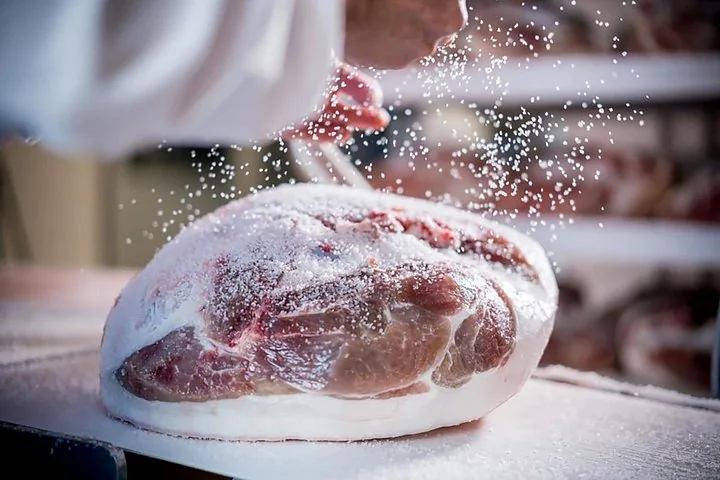
By a salt master, with humid sea salt on the rind and dry salt on the lean meat, in rooms kept at 1 to 4 C: about a week, then a second salting of 15 to 18 days.
The salt master uses as little salt as the ham needs, and the 2025 rules lowered the maximum salt content further. The Consorzio says this is why Prosciutto di Parma tastes less salty than many other cured hams: sweetness is the aim.
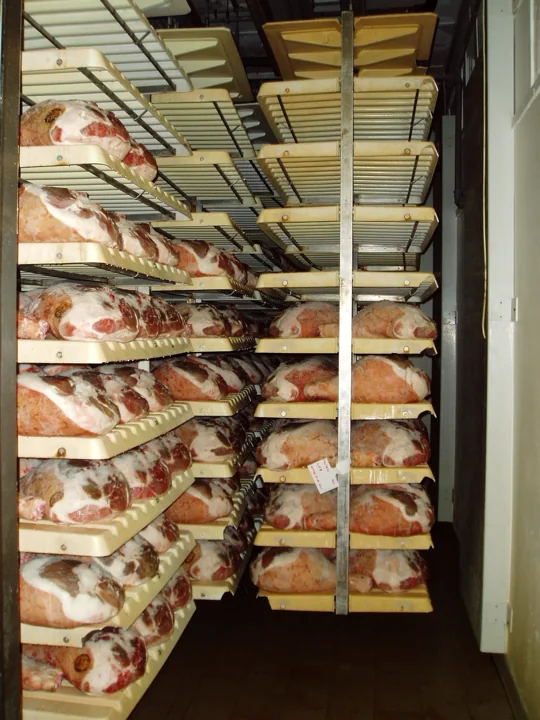
Stand in the cold salting rooms yourself, with a guide from a working maker and a van from Parma station.
Check dates for the Parma ham maker tourWhy do the hams rest and dry for months?
The 60 to 90 days in cold, humid rooms let the salt spread slowly through the meat. Then the hams are washed with warm water, brushed and dried for about three months in rooms with large windows.
This is where the hills matter. The large windows let in the dry, breezy air of the Parma hills, which slowly draws the moisture out. On a tour you feel the change as you move from the chilled salting rooms into the milder, scented halls.
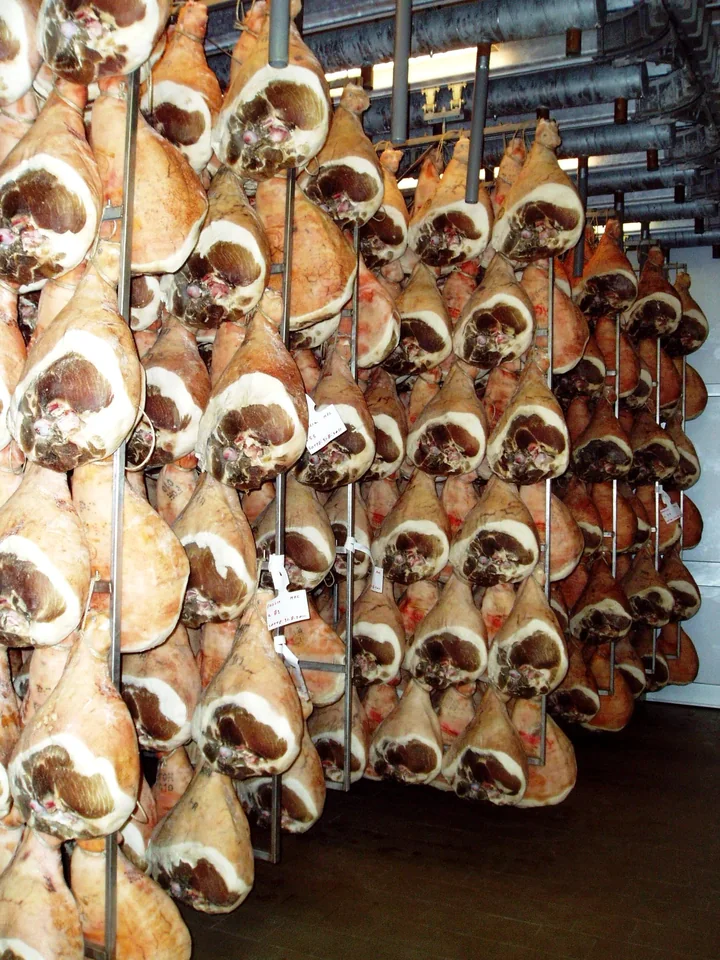
What is sugnatura?
Covering the exposed lean face of the ham with sugna, a paste of minced lard and salt, so the meat stays soft and does not dry out too fast.
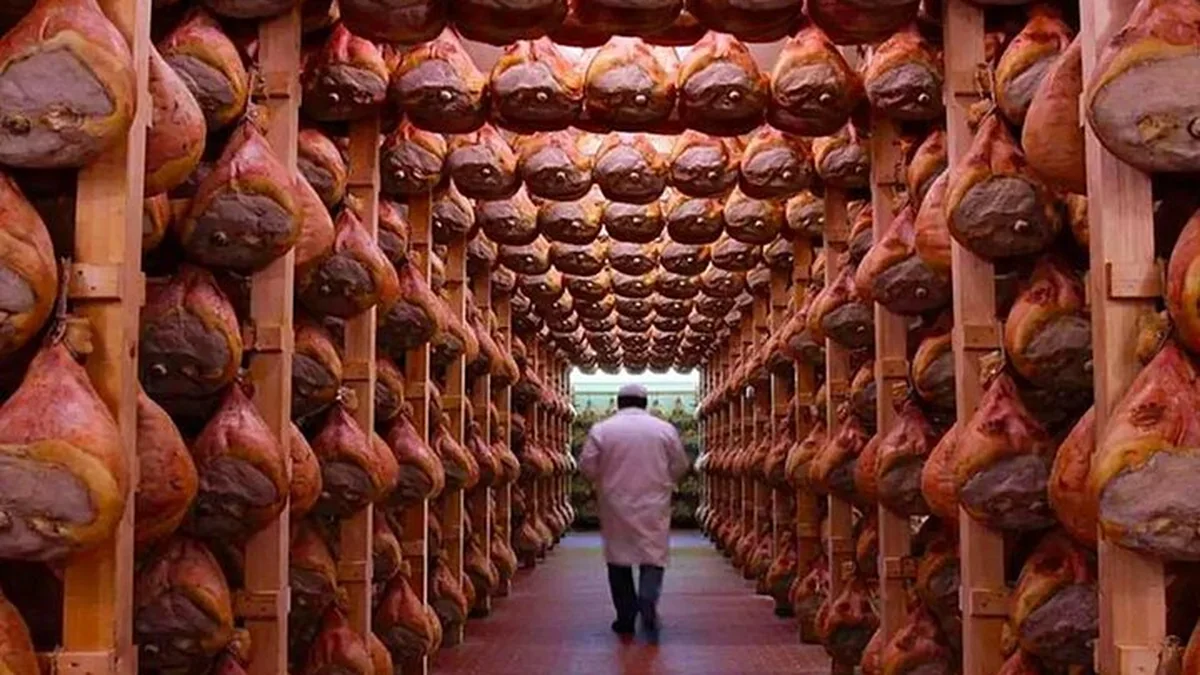
It is the grey-white layer you see on the cut face of every ham in a curing hall. The rind protects the rest of the leg; the sugna protects the lean where there is no rind.
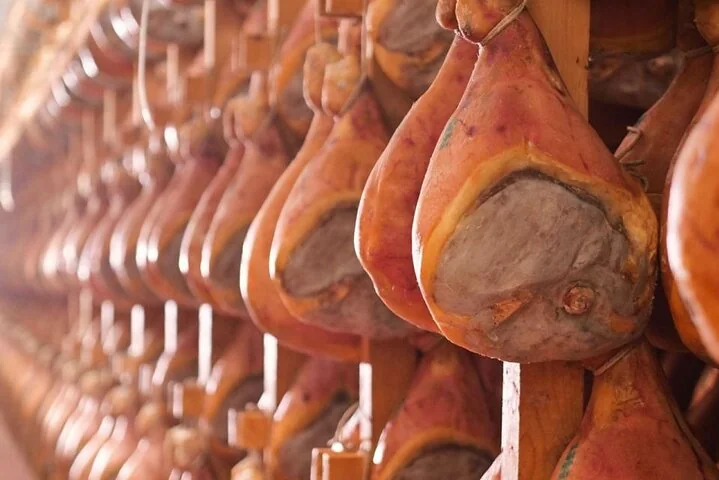
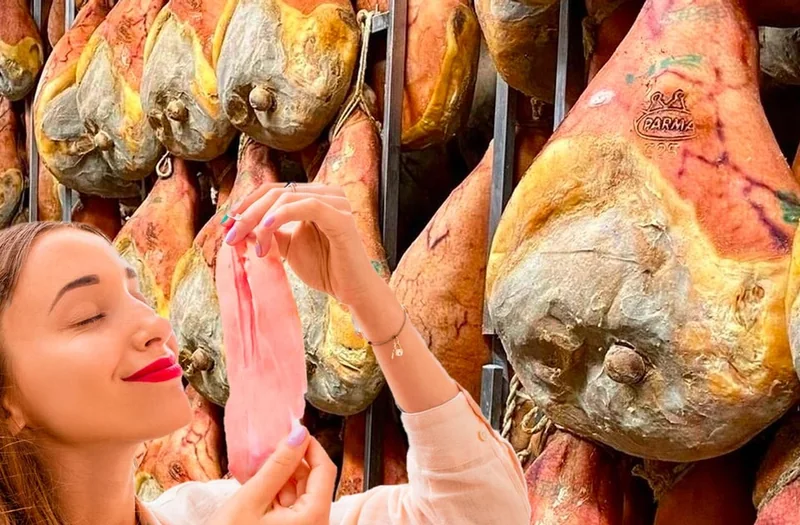
Watch the ham's whole year in one visit: salting machines, refrigeration cells, the maturing rooms and the crown.
Explore the Parma ham maker tourHow long is Parma ham aged?
At least 14 months under the rules approved in 2025, up from 12. Many hams cure for longer, some for 24 or even 36 months.
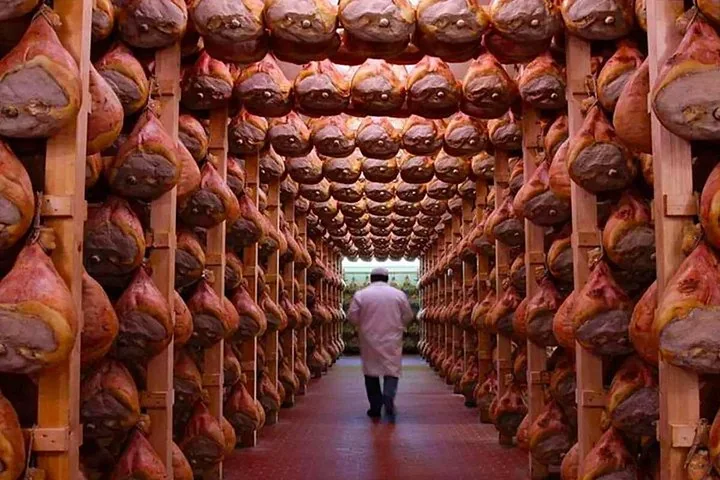
Curing moves to cellars from the seventh month. The new rules, approved by the European Commission in 2025 after four years of revision, also reduced the salt, called for heavier legs and extended the area where the pigs may be raised. The minimum is a floor, not a target: the age of a ham is part of what you taste.
What is the horse-bone needle test?
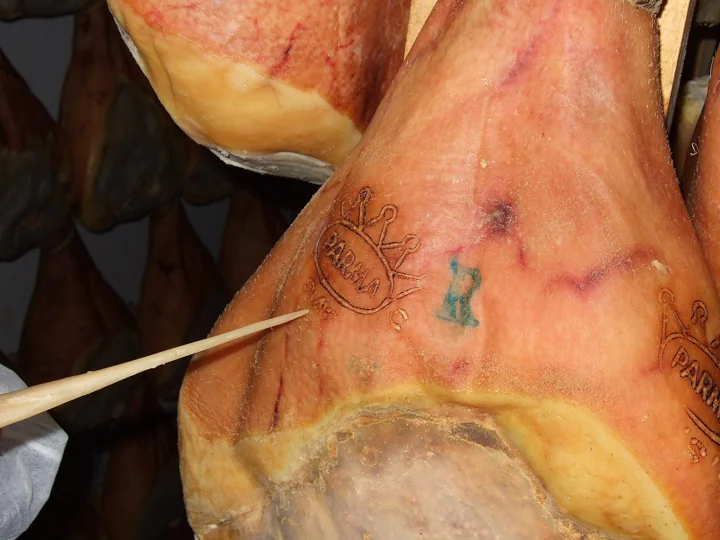
At the end of curing, an inspector pierces each ham in several points with a needle made of horse bone and smells it. The bone takes up the aroma for a moment, and the nose decides.
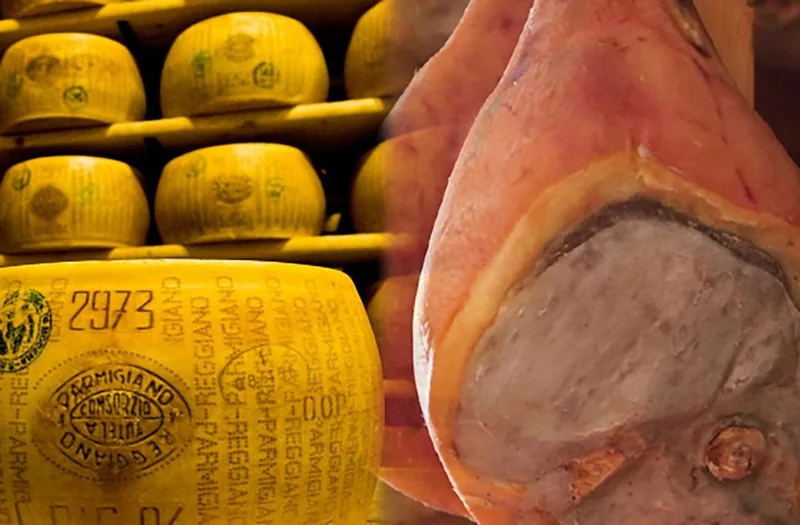
It takes seconds per ham and is the one moment every visitor remembers. Ask your guide to show you the needle; on the ham maker tour the tapping and the branding are explained in the maturing rooms. The dairies have their own version: Parmigiano wheels are tapped with a hammer.
See the dairy and the ham maker in one morning, rated 4.9 from 955 reviews.
Check dates for the Parmigiano and Parma ham tourWhat does the crown on Parma ham mean?
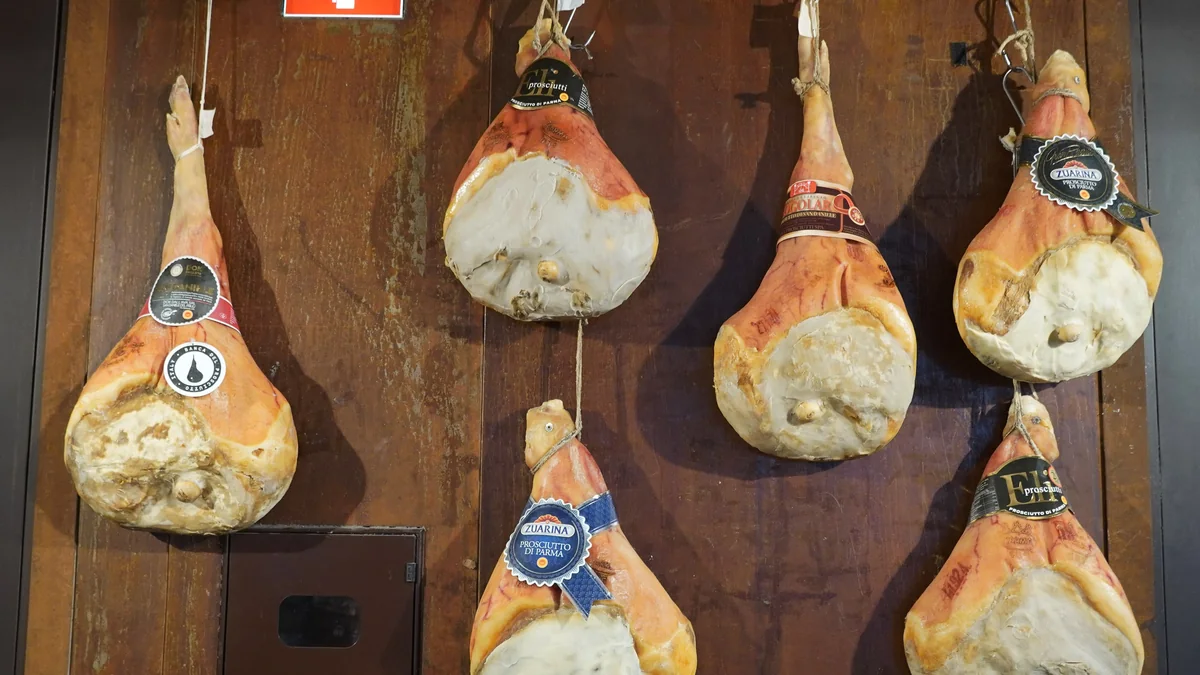
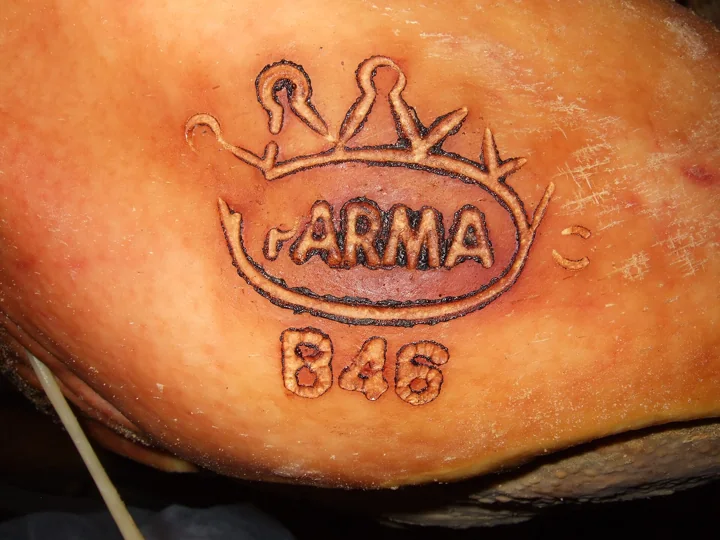
It is the five-pointed ducal crown with the word PARMA, fire-branded on every ham that passes the final inspection. Only crowned hams may be sold as Prosciutto di Parma.
About 127 authorised producers branded 6.7 million hams in 2024, and 38% were exported. The industry employs about 3,000 people in the province and about 50,000 along the whole supply chain. Most of the makers are around Langhirano, the ham town, whose museum tells the story: Langhirano and the ham museum. How to find the crown when you shop is in how to buy and eat Parma ham.
Frequently asked questions
Does Parma ham contain nitrates?
No. Only pork legs and sea salt are allowed; no nitrites, nitrates or other preservatives.
How long does it take to make Parma ham?
At least 14 months under the 2025 rules, and often 24 months or more.
Where is Parma ham made?
Only in the hills of the province of Parma, at least 5 km south of the Via Emilia and up to 900 metres; Langhirano is the centre.
How many Parma hams are made each year?
About 6.7 million hams were branded in 2024, by about 127 producers.
Ready to book
Choose your day
Free cancellation up to 24 hours before on every option. Prices are from-prices in USD and move with the season.
Prosciutto di Parma Tour with Tasting
- Transfer from Parma in an air-conditioned van
- Guided visit of a Prosciutto di Parma maker, cold and warm phases
- The salting rooms, the maturing halls and the needle test
Parmigiano and Parma Ham Production Tour
- Pickup and drop-off at points in Parma
- Parmigiano Reggiano dairy and aging room
- A family Prosciutto di Parma maker in the hills

Parmigiano and Prosciutto Private Tasting Tour
Your own guide at a dairy and a ham plant